• She was the center of attention. Discussions and conflicts surrounded her. She knew they were discussing her options. Lifetime choices with dreadful consequences, but no one accounted for her. No one even considered the importance of her role. She sat in silence.

    On one side there was possession and control. On the other side, there was what is best for everyone. Their quarreling led to terror and confusion. Everyone was wanting their way. She was voiceless.

    She has been rejected by the one she loved. She felt insignificant, unappreciated, and humiliated.  The group had found her lacking, and she had been dismissed. The importance of her role was inconsequential.

    Her heart was being dismantled. Somehow she was being torn apart. She could see the blood and the tear. If anyone noticed, they did not acknowledge it. She marveled at her ability to endure pain.

    Eventually she had no choice but to withdraw into herself. She went to the fantasy world where was wanted, respected, and loved. The place where people were happy to be in her presence. However, she knew it was make-belief.

    No one was ever happy to see her, and no one enjoyed her company. Her fate was sealed that night. As she walked away totally disconnected from her emotions, she was consciously aware that a life changing event had happened. She would never be the same..

    Everyone was relieved with the outcome. Some could say they were even happy. She remembered the smiles and handshakes. The problem had been resolved.

    As she looked around she wondered. Did anyone noticed that she was still bleeding? How will she live without the part they had just taken away from her? I guess it was their hope that she would forget.

    Well, guess what?

    She never did.

    2026@Walkingwithtrauma.org

  • There she was…watching the past. If someone had mentioned this a year ago her answer would have been a definite and vociferous, NO.  She had established a plan, found allies who helped her pray for wisdom, and made firm decisions. The shield of the Lord was upon her, and all she needed was to stand firm. 

    The mix up was about the meaning of love. According to 1 Corinthians 13:4-8; love is a commitment to behaviors that demonstrate what’s in the heart. When one loves, one is patient, kind, not proud nor self-seeking. One does not become angry easily, nor keep a record of someone else’s faults. In the relationship with the one loved, one rejoices in the truth, and does not delight in any evil that might harm the one loved. Love protects, trusts, hopes and always perseveres. It faces life’s difficulties with you, provides encouragement, supports, and prays when the loved one is in trouble. Love revealed itself in actions.

    There she stood facing emotional love. A love based on feel good feelings released by the brain chemicals like dopamine, oxytocin, adrenaline and euphoric hormones.   Focus on getting attention and praise, where one’s privacy and boundaries did not matter. Where one acted like a victim and blamed others for their failures.  She could have chosen to follow the same path; played the same game. However, she was determined not to. She stood firm, convinced that she already knew real and perfect love. He had loved her when no one else had; 1 John 4:19.  She was so grateful to him that she refused to compromise. 

     She walked away sadly knowing defeat, for there would be no repentance. So much time had passed with no reflection, nor discernment.  As tears flowed, and her heart broke in sadness, she stood firm. Knowing that the only reason she was still standing was because he was her pillar, her strength and support; Joshua 1:9.  She turned and smiled at him whispering, “Thank you.”

    Copyright 2026 Walkingwithtrauma.org

  • Volviendo Atrás

                Hace meses que el Señor está hablando. Ha estado diciendo que ya es tiempo. Las primeras señales vinieron cuando llegó a la sexta década. La estadía en el hospital disminuyó su nivel de estrés y tuvo tiempo para leer, meditar y analizar.  Esto le hizo enfrentar sus limitaciones.  

                El volver a la rutina de la vida fue exhausto. Muchas veces sentía que estaba paladeando sin poder alcanzar la meta. El costo de funcionar mientras mantenía los síntomas bajo control era agotador.  

                Empezó a buscar alternativas. Estudió lugares donde pudiera mejorar su calidad de vida.  La salud, la economía, y las responsabilidades diarias eran obstáculos gigantes que le impedían alcanzar sus objetivos. Oro por mucho tiempo, esperó y pidió sabiduría.  Y un día, el Señor la sorprendió.

                Le dijo; “Vuelve al principio.” Admite enfáticamente que rechazó la idea al escucharla. ¿Volver al principio y su deterioro? ¿Volver al lugar de desesperanza? Pero si hace más de dos décadas que eso quedo atrás. Actualmente está en el olvido. ¿Porque mirar atrás?

    Los versos de Isaías 55:8-9 vienen a la mente. No tiene entendimiento de las intenciones de Dios, ni de sus propósitos. Él le ha pedido vivir un tiempo en la incertidumbre.  Si confía totalmente en él, pero las emociones incómodas, la falta de control, el no poder ver el camino por donde anda, y el miedo de ser lastimada le paralizan.

    Comienza a analizar las oraciones. ¿Qué le ha pedido al Señor últimamente? ¿Dirección? ¿Sabiduría? ¿Cambios en su calidad de vida? Pero; ¿Volver atrás? “Jamás.”

    Ha tomado el primer paso en la senda. Lleva planes y propósitos mientras vuelve atrás. Por el momento no entiende como enfrentará la rotura y el desgaste del abandono del pasado. Ni sabe como lo va ha manejar. Pero no va sola. Hay cuatro creyentes caminando a su lado, y entre ellos reina el Señor.

    No puede negar la tristeza, la angustia, y el temor que siente al pensar en cómo enfrentara el pasado.

    Copyright 2025 Walkingwithtrauma.org

  • Mientras contempla sus llagas

                Llevaba semanas disfrutando los días de verano.  Caminando en el parque, bromeando con amigos, ensenando clases bíblicas, estudiando, y trabajando. Se imaginaba que todo estaba bien, pues se había acostumbrado a no prestar mucha atención. Pero al despertar esa mañana sintió esa sensación usual. Era como si algo la amenazaba, y comprendió que ya se acercaba el momento.    

                Su deseo primordial era que nada de eso fuera cierto. Anteriormente, había tomado la decisión de hacer que su mente olvidara y lo logro por mucho tiempo.  Lamentablemente eso ya no era posible. Había llegado el momento de enfrentar su realidad. El momento de contemplar sus llagas.

                Estas eran recordatorios de la lucha por su alma. Ella fue parte integral de un conflicto entre el bien y el mal.  No nació equipada para tal contienda. Ni siquiera entendía lo que estaba en juego. Pero sobrevivir siempre fue su meta. Por eso el la ayudaba, enviándole ángeles para que le hicieran compañía; hebreos 1:14.

    No tengo argumentos para defender la decisión que tomo en su desesperación. Pero no tuvo otra opción. Vivía diariamente con su sistema nervioso congelado y esta era la única manera de tolerar el estrés emocional, el rechazo, y la violencia del trauma[1].  La disociación, la amnesia, la desconexión, la falta de respuesta emocional, y el separarse de sí, eran estrategias para subsistir la batalla.  Fueron décadas de conflicto y eventualmente sus tácticas empezaron a perjudicarle.   

    Había aprendido a vivir en la dualidad.  Por un lado, sentía un profundo agradecimiento por tener vida, y a su vez un gran sufrimiento al contemplar sus llagas. 

    Aquellos con buenas intenciones, la impulsaban a olvidar el pasado y mirar hacia adelante; filipenses 3:13-14.  Ella entendía que había obtenido un nuevo corazón y que era una nueva criatura; Ezequiel 36:26 y 2 Corintios 5:17. Por eso trataba de vivir en el presente. Hasta que recordaba sus llagas.

    Al mirarlas dejaba de disfrutar la vida. A pesar de que él fue victorioso, eran intolerables. En esos momentos ella se preguntaba, como afrontaba él las suyas; Juan 20: 24-29. ¿Vivía la misma dualidad que ella? Por un lado, el dolor de su sacrifico por el pecado, y por otro el gozo de haber obedecido al Padre.

     Hoy, se consuela en saber que este sufrimiento no será para siempre.  Él enjugará toda lágrima de los ojos. Ya no habrá muerte ni llanto, tampoco lamento ni dolor, porque las primeras cosas han dejado de existir; Apocalipsis 21:4. 

    Ella descansa y espera. Pues muy pronto, dejara de ver sus llagas.

    2025@ Copyright Viviendo con trauma


    [1] [1] Dezelic, Marie S. Meadows Outpatient Handbook. P238.

  • Dissociation has been part of her identity since early childhood.  She was never able to see it as a behavior. It was just a fact of being who she was.  When unable to tolerate life’s threating behaviors, highly emotional stress events, or physical harm, she would dissociate.

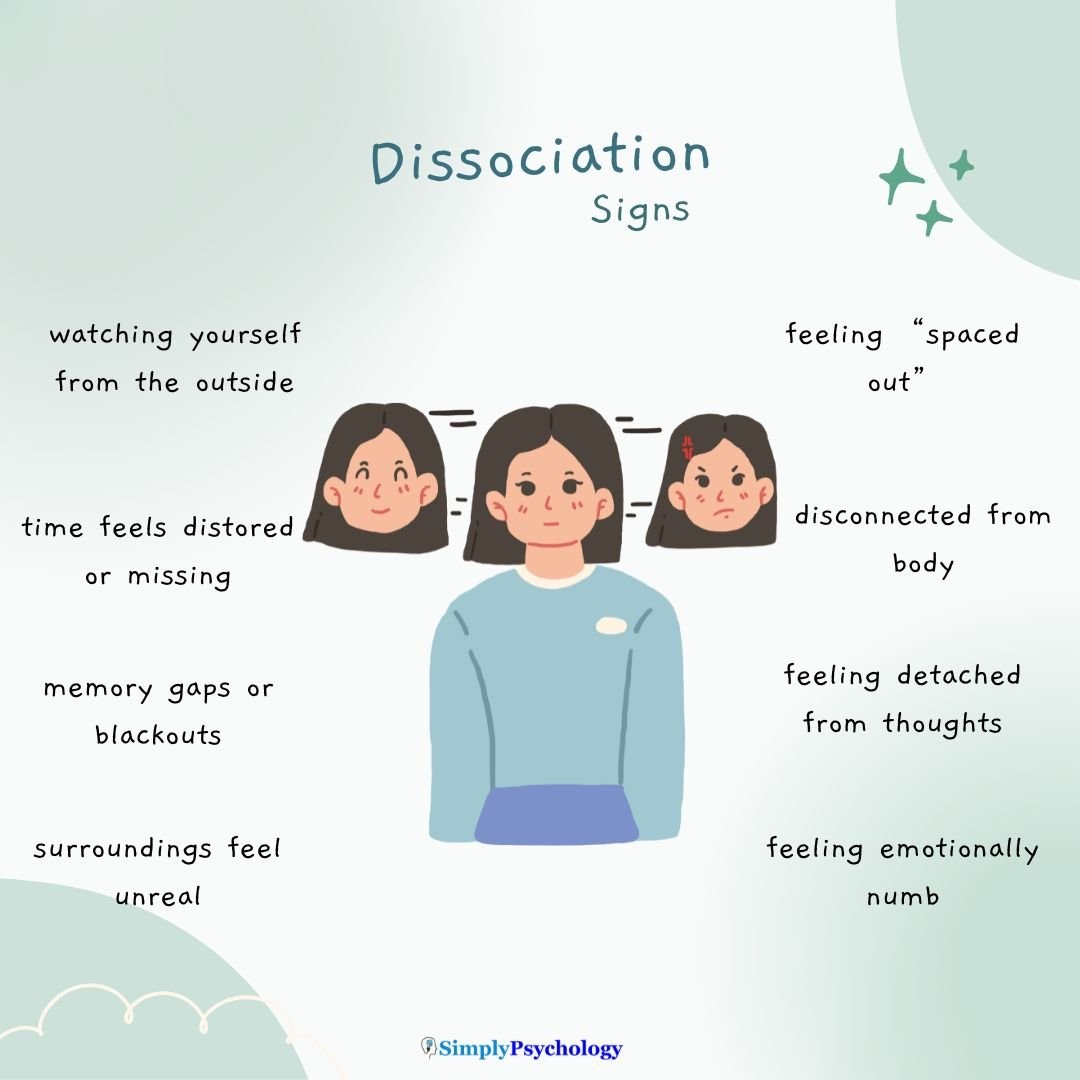
    So, you may ask what is dissociation. Dissociation is when you separate the part of you that keeps up with your daily tasks from the painful or fearful emotions and memories.[1]  It reveals itself when the mind is foggy, or one has difficulty concentrating. It also brings up numbness or feelings of being cut off.[2]  In extreme situations there are lapses in memory or lost time.[3]

     She always thought it was common for others to forget years of their childhood, early school days, graduations, and friends. It seemed odd when she heard others speaking about childhood events as if they were happening at that moment.  She thought they must have brilliant minds to remember such details. The fact was, they have never dissociated.

     She was 42 when her body began to remember, what her mind had chosen to forget. It was so confusing and horrendous. Most of the time, it felt like she was watching a movie. Except when her body began to relive the events.  

    She will always be grateful for his patience; Isaiah 26:3.  She praises him daily for his compassion and goodness toward her; Psalm 103:8-13.  She specifically gives thanks for his great love for even though it was impossible for her to believe, he took the role of Father.

    When she was prepared, he revealed the truth; Luke 8:17.  To this day, she continually gives him praise for her ability to dissociate. For if she had not been able to use this defense mechanism, she would have never survived the battle.

    For those who knew her: When she was present she will remember you.  If she was dissociated; Please introduce yourself and remind her where you met.

    P.S. If you see her looking dazed, let her know she is safe.


    [1] Schwartz, Arielle. The Complex PTSD Workbook. California: Althea Press, 2016.

    [2] Schwartz, “The Complex PTSD Workbook,” 74.

    [3] Schwartz, “The Complex PTSD Workbook,” 74.

    [4] What is dissociation? Type Causes and Symptoms. Accessed on July 16th, 2025.

    2025 Copyright Walking with Trauma

  • For weeks, she had been enjoying her days walking, laughing, teaching, learning, and working. She made herself believed all was well. She had grown accustomed not to take notice.   However, when she woke that morning, dread and apprehension welcomed her. She knew the time was coming.

    Her deepest desire was for all to disappear. She had made herself forget previously, but that was no longer possible. She now had to face them; the scars. They were reminders of the war for her soul.  She was born to a battle of good and evil.  She was never equipped for it, and did not understand what was at stake.  However, her desire and instinct of survival were unquestionable. Because he watched over her, he would send angels to be her company; Hebrews 1:14.   

    Whether it was the best decision is still questionable, but she had no choice.  Her nervous system dwelled in the freeze response. It was the only way to tolerate the emotional stress, the rejection and the violence that came with trauma[1].  The dissociation, memory loss, disconnection, lack of response emotionally, and separation from self, helped her endure the battle.  The use of these to survive for so many years, caused damage. She lived in a dichotomy; grateful for being alive, and at the same time dreading viewing her scars.

    Those with good intentions encourage her to forget the past and to move forward; Philippians 3:13-14. She knew she had been given a new heart; Ezekiel 36:26  and was a new creation; 2 Corinthians 5:17.  So, she moved forward and lived in the present. That was, until she encountered the deterrents.

    The moment she glanced at her scars, life stopped being enjoyable.  They were reminders of the battle.  Even though He won, it was still unbearable to catch sight of them after all this time. She wondered how he dealt with his.  John 20:24-29 says; “Until I see the nail marks in his hands and put my finger where the nails were, and put my hand into side, I will not believe”. Did he grieve when glancing at the cost of making others free? Was her Lord like her? Living in a dichotomy between the pain from paying a price, and obedience.  

    She finds comfort in knowing that this will not be forever. For God will wipe away all tears from her eyes; and there will be no more sorrow, nor crying, nor pain…For the former things will passed away; Revelation 21:4

    She sighs and rests. For one day, her scars will really disappear.


    [1] Dezelic, Marie S. Meadows Outpatient Handbook. P238.

    Copyright @2025 All Rights Reserved

  • Ella y el trauma de vinculación excesiva

    Mientras el Pastor leía los últimos versos de la carta de Judas, ella reflexionaba sobre la implicación a su vida; Judas 24-25. Para otros el ser guardado para no caer, y ser presentado sin mancha ante el Señor, ofrecía seguridad. Sin embargo, ella sentía que se asfixiaba, al percatarse que estaba siendo observada. El pensar que alguien pudiera examinar su vida diariamente le hacía sentirse acosada.


    Para el que vive con trauma de vinculación excesiva, el ser monitoreado es asociado con peligro, cautividad y esclavitud. Trauma de vinculación excesiva ocurre durante el desarrollo del niño en familias donde no existen límites emocionales, ni físicos.1 La personalidad del niño es absorbida, mientras suple las necesidades de otros2. Su rol es confuso, y su voz y deseos son reprimidos3. Crece, sin sentido de privacidad y autonomía4. Su temor a ser consumido por las demandas de tiempo y atención de otros, le impide tener relaciones interpersonales sanas.


    Ella lleva años observando y estudiando el comportamiento del Señor. Se ha preguntado muchas veces; ¿Es él verdaderamente creíble? ¿Qué quiere de ella? ¿Sobre todo, porque dice que la ama? A pesar de sus dudas, él ha llegado a ganarse su confianza. Dicen los médicos que ella ve la vida a través del trauma y cada vez que su confianza en él es retada, se ve obligada a considerar lo cierto y verdadero. Por eso, vuelve a él; Juan 6:68.


    ¿Quién es su verdad? El Señor Jesucristo es su verdad; Juan 14:6. ¿Dónde está esa verdad? En la palabra; Juan 17:17. ¿Qué hace la palabra de Dios en su mente? Renueva su entendimiento; Romanos 12:2.


    Y mientras el sigue renovando su mente, ella aprende a confiar más en él. Quizás algún día su reacción no será la de sentirse acosada, sino que aprenderá lo que es ser protegida y amada por él.

    Copyright @2025

    1. Melody, Pia. Meadows Outpatient Handbook, 53. ↩︎
    2. Ibid. ↩︎
    3. Ibid. ↩︎
    4. Ibid. ↩︎

  • She walked three blocks on Sunday morning

    Bundled in her coat and hat,

    Looking frantically for his presence

    Saving a seat where she was at.

    She sat in the pew with the others

    Listened for his loving-kindness

    But her joy could not be completed

    Until she would see him by her.

    Oh! his tender mercies were loving

    And his deliverance gave joy,

    She could not describe his cleansing

    Nor his assurance of love.

    The benediction was cited

    As the crowds moved away,

    She searched for him in their eyes

    As they all slipped away.

    She was left disappointed

    Waiting in anticipation

    Never becoming aware

    His embrace was all around her.

    Copyright 2025 @ All Rights Reserved